Pedestrian walkways
Warehouse safety marking helps separate people from forklifts and vehicles with visible walking routes and crossings.


Industrial Safety Marking
From pedestrian walkways and forklift routes to hazard zones and restricted areas, clear safety marking helps people recognize risks before they become incidents. OPTI SIGN brings safety marking to the next level with precise, high-visibility projected warning signs.
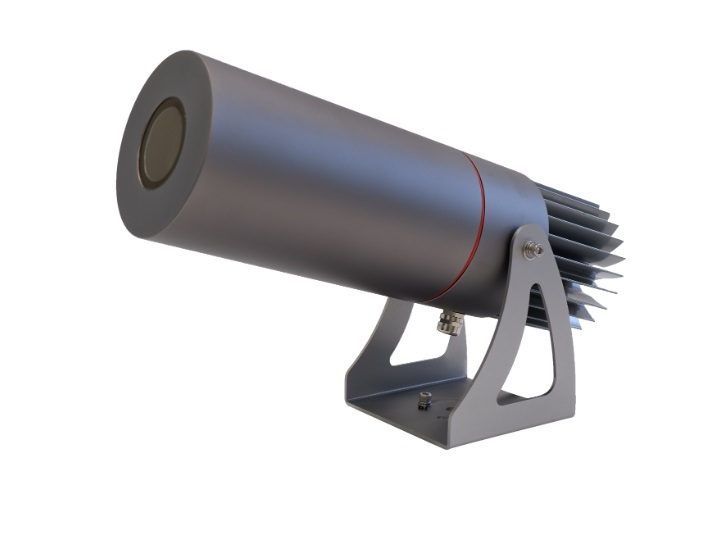
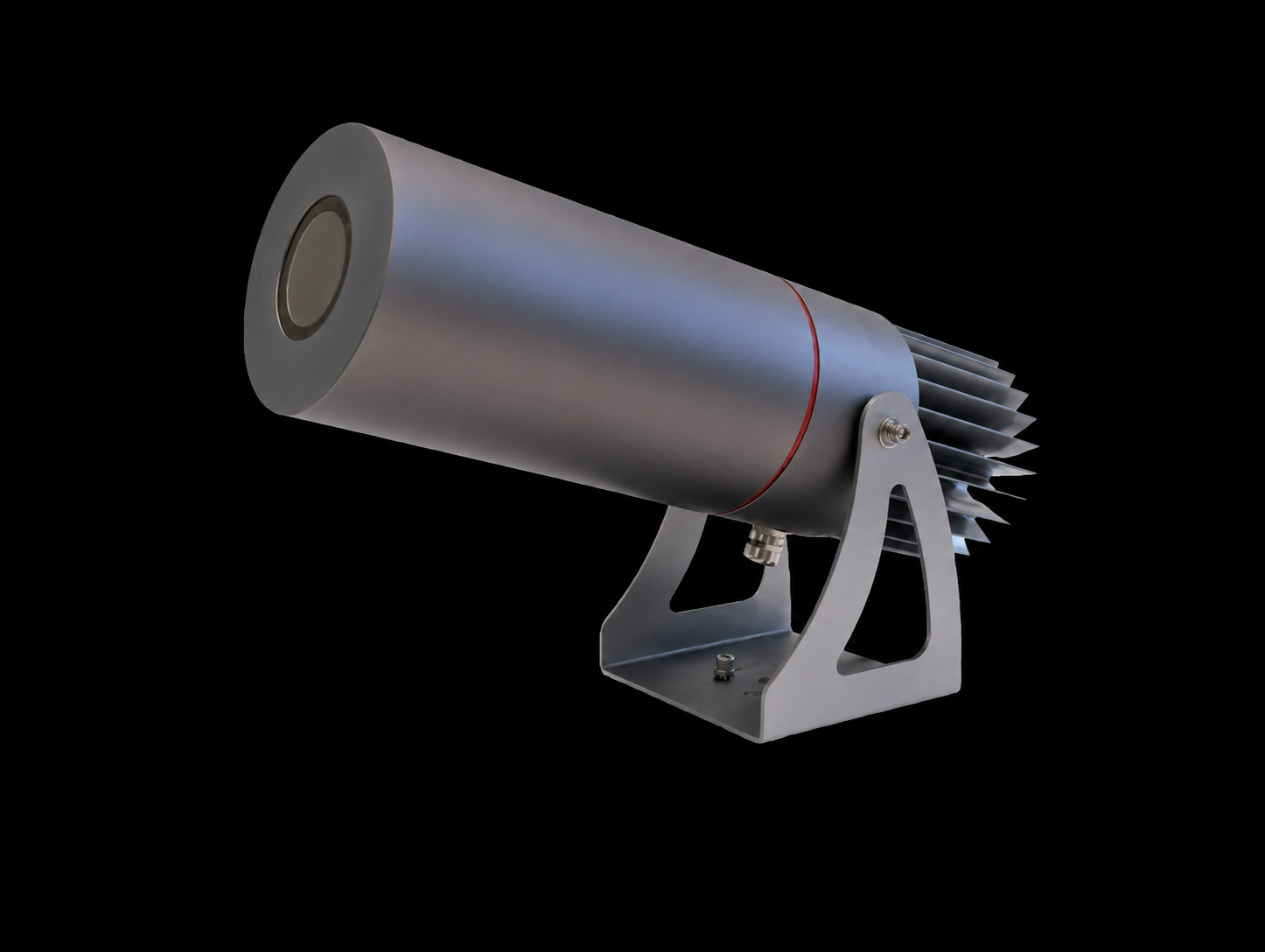
Safety marking uses lines, symbols, colors, signs and visual signals to identify pedestrian routes, driving lanes, restricted areas, danger zones, loading areas, emergency routes and machine-related hazards.
Warehouse safety marking helps separate people from forklifts and vehicles with visible walking routes and crossings.
Industrial floor marking supports clearer routes for forklifts, trucks and other mobile equipment.
Hazard area marking and danger zone marking make machine risks, restricted spaces and loading areas easier to recognize.
Clear visual signals mark areas where only authorized personnel should enter or where specific procedures apply.
Floor safety marking can be painted, taped, signed or projected, depending on visibility, durability and maintenance requirements.
Paint, tape and static signs can work well in the right environment. But in demanding industrial areas, visibility often decreases over time due to traffic, dust, dirt, abrasion and layout changes.
Painted floor markings can fade under forklift traffic, cleaning machines and daily abrasion.
Adhesive floor marking tape can lift at edges, collect dirt or require replacement in high-traffic areas.
Wall signs and printed warnings can lose attention when workers see them every day or when sight lines are blocked.
In production halls, warehouses and loading zones, floor markings can become difficult to see when surfaces are contaminated.
When routes, zones or processes change, painted or taped markings usually require manual rework.
Repainting and remarking can interrupt operations, require preparation time and create avoidable maintenance work.
The best safety marking system depends on surface condition, traffic intensity, visibility needs, flexibility and maintenance windows.
| Method | Best for | Limitations | Maintenance effort |
|---|---|---|---|
| Floor paint | Permanent routes and simple line markings. | Can fade, requires preparation/drying time, harder to change. | Medium to high. |
| Floor tape | Fast installation and flexible indoor marking. | Can peel or wear in heavy traffic. | Medium. |
| Static signs | General warnings and fixed instructions. | Can be overlooked, blocked or ignored. | Low to medium. |
| Projected safety signs | High-visibility warnings, hazard zones, pedestrian routes, forklift areas and dirty/high-traffic zones. | Requires projector installation and correct positioning. | Low, depending on environment and setup. |
The right solution depends on the site. In high-traffic or visibility-critical areas, projected safety marking can reduce the need for repainting and keep warnings visible where conventional markings lose impact.
Projected safety marking uses an industrial projector to display warning symbols, lines, routes or restricted zones directly onto floors or walls. Instead of relying on painted or adhesive markings on the surface, the warning is created with light.
Projected warning signs can mark machine danger areas, loading zones or temporary hazard areas without repainting the floor. They are useful where floor markings wear quickly or become covered.
Pedestrian walkway marking can be projected onto floors or walls to guide people through traffic zones and crossings with higher visual impact.
Forklift safety marking benefits from clear, repeated warning symbols near intersections, blind spots and shared routes.
Projected restricted-zone symbols help identify areas where access should be controlled, especially when layouts change or temporary zones are needed.
When floors are crowded, dirty or hard to mark, projected warning signs on walls can keep the safety message visible in the working environment.
From forklift crossings and pedestrian routes to crane danger zones and loading bays, OPTI SIGN makes critical safety information visible directly where people work, walk and drive.
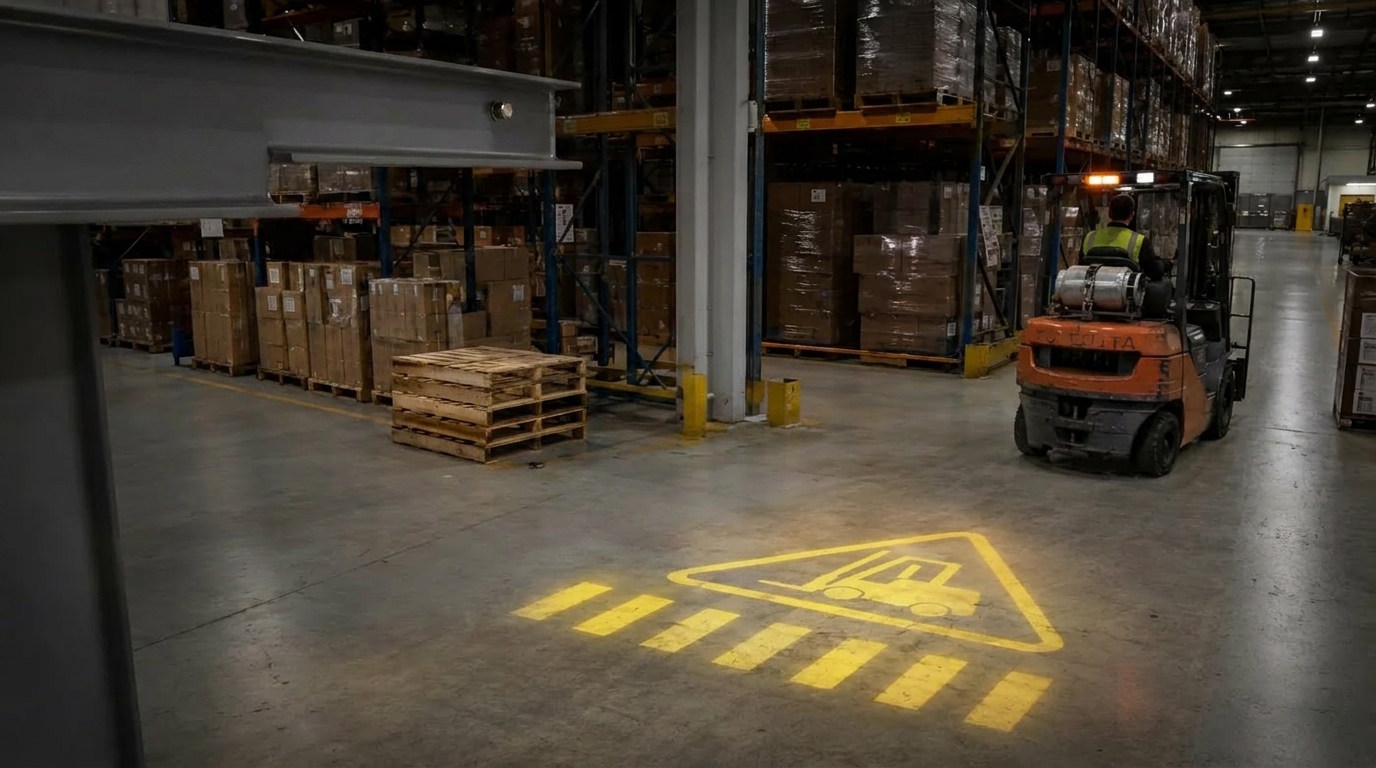
Projected forklift crossing signs help make shared routes between vehicles and pedestrians easier to recognize. In busy warehouse aisles, OPTI SIGN can project high-visibility warning symbols directly onto the floor where forklift traffic and pedestrian movement meet.
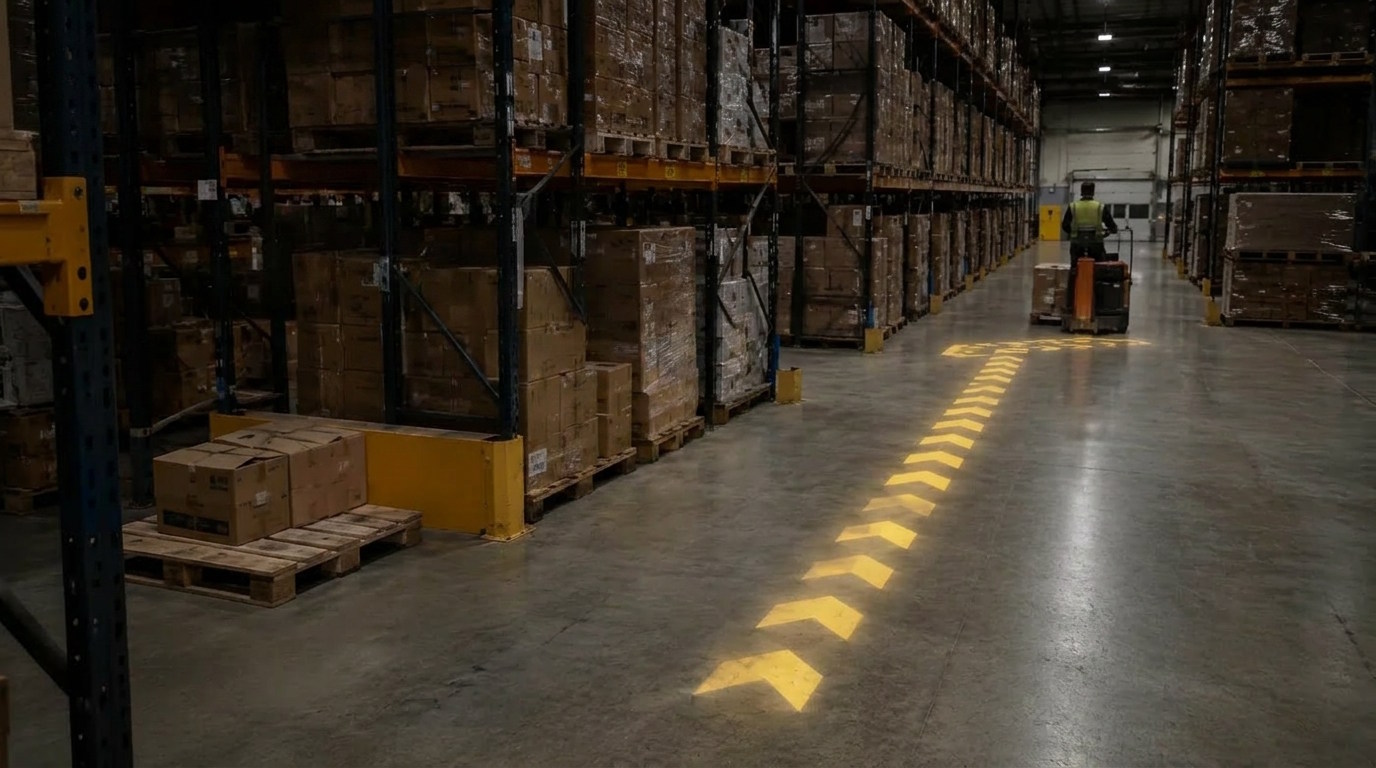
Projected way guiding lights can support clearer movement through warehouses, logistics areas and production halls. Arrows, route lines and direction symbols help guide workers, visitors and vehicles without relying only on painted or taped floor markings.
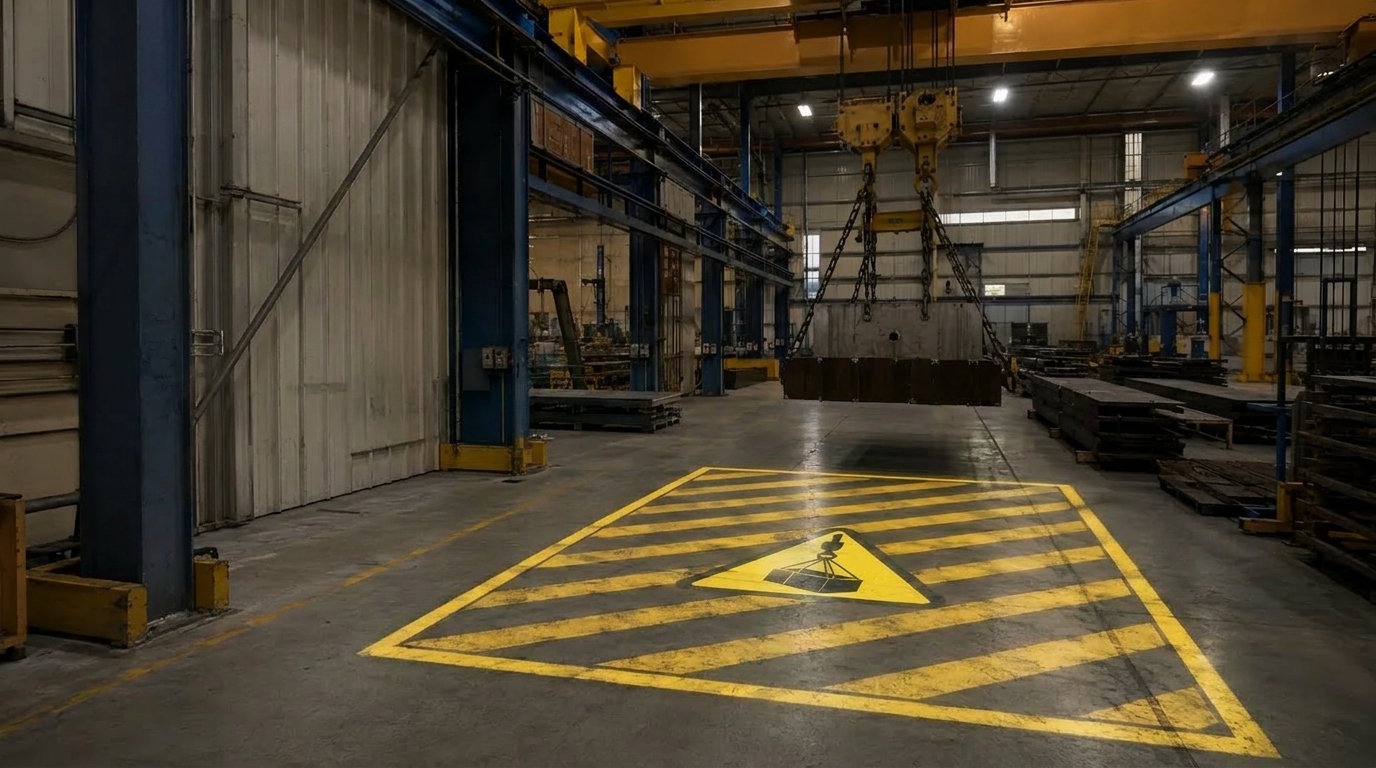
In halls with overhead cranes, projected hazard area marking can make the danger zone below moving or suspended loads more visible. OPTI SIGN helps mark crane operating areas directly on the floor so workers can recognize the risk area faster.
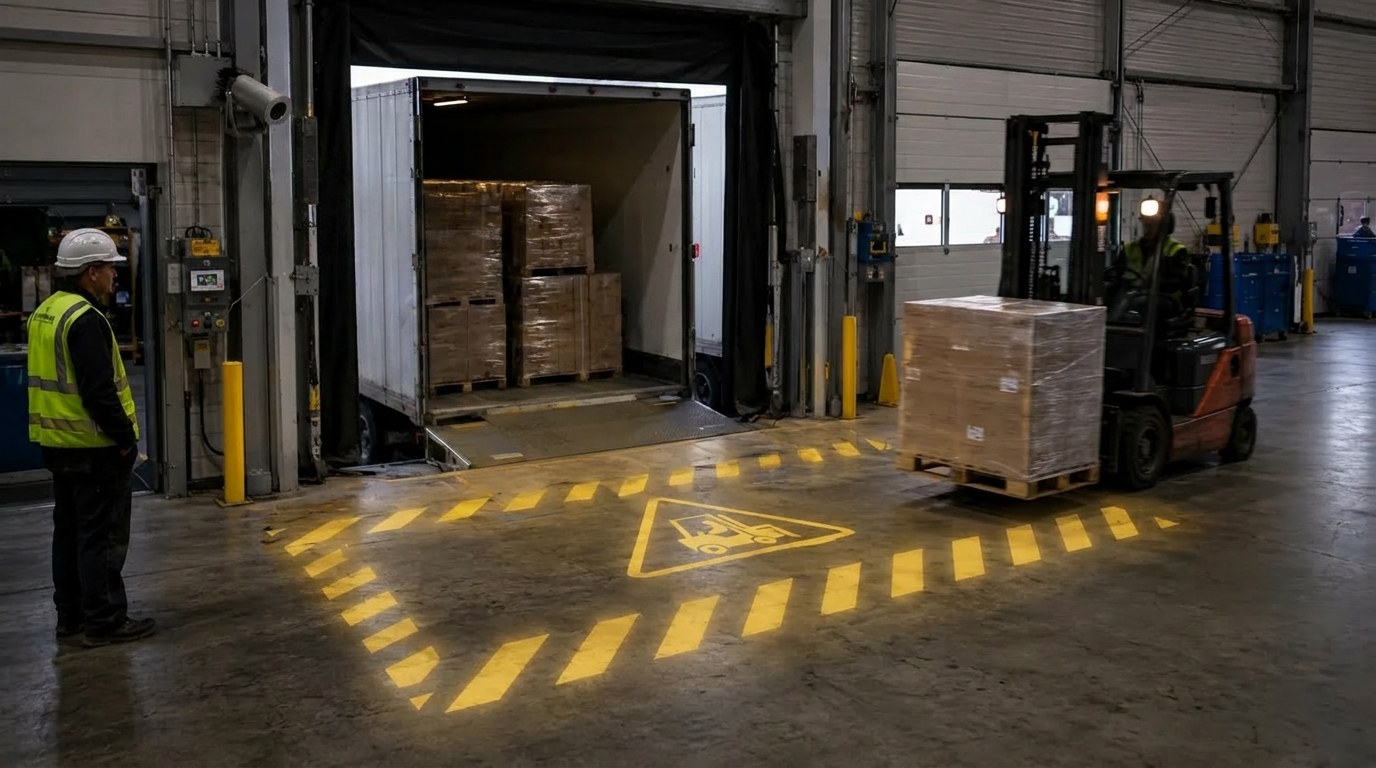
Loading bays combine trucks, forklifts, pallets and pedestrians in a compact working area. Projected safety signs can highlight loading zones, forklift paths and caution areas even when the floor is exposed to dirt, tire marks and heavy traffic.
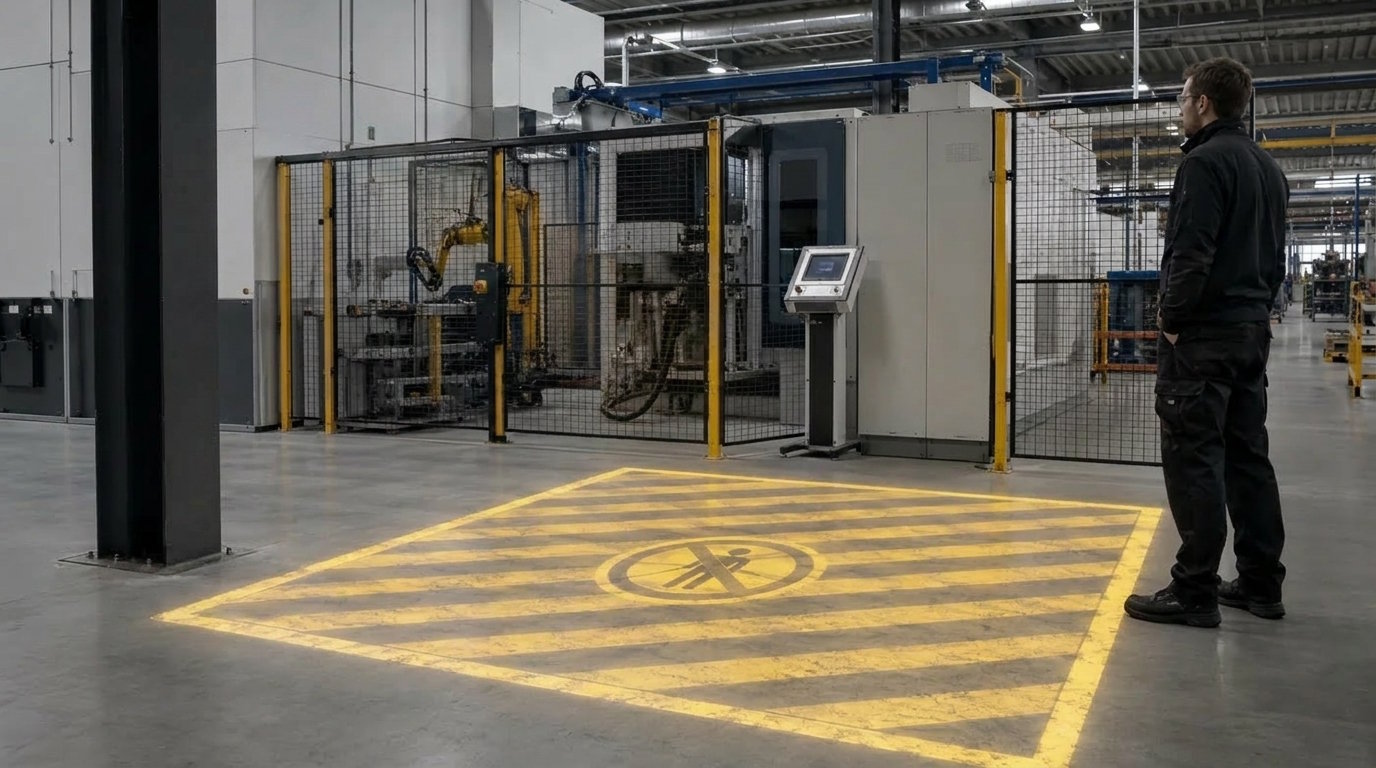
Projected hazard zone marking can help identify machine-related risk areas around production equipment, automated systems and restricted operating zones. The safety message stays visible without repainting the floor around the machine.
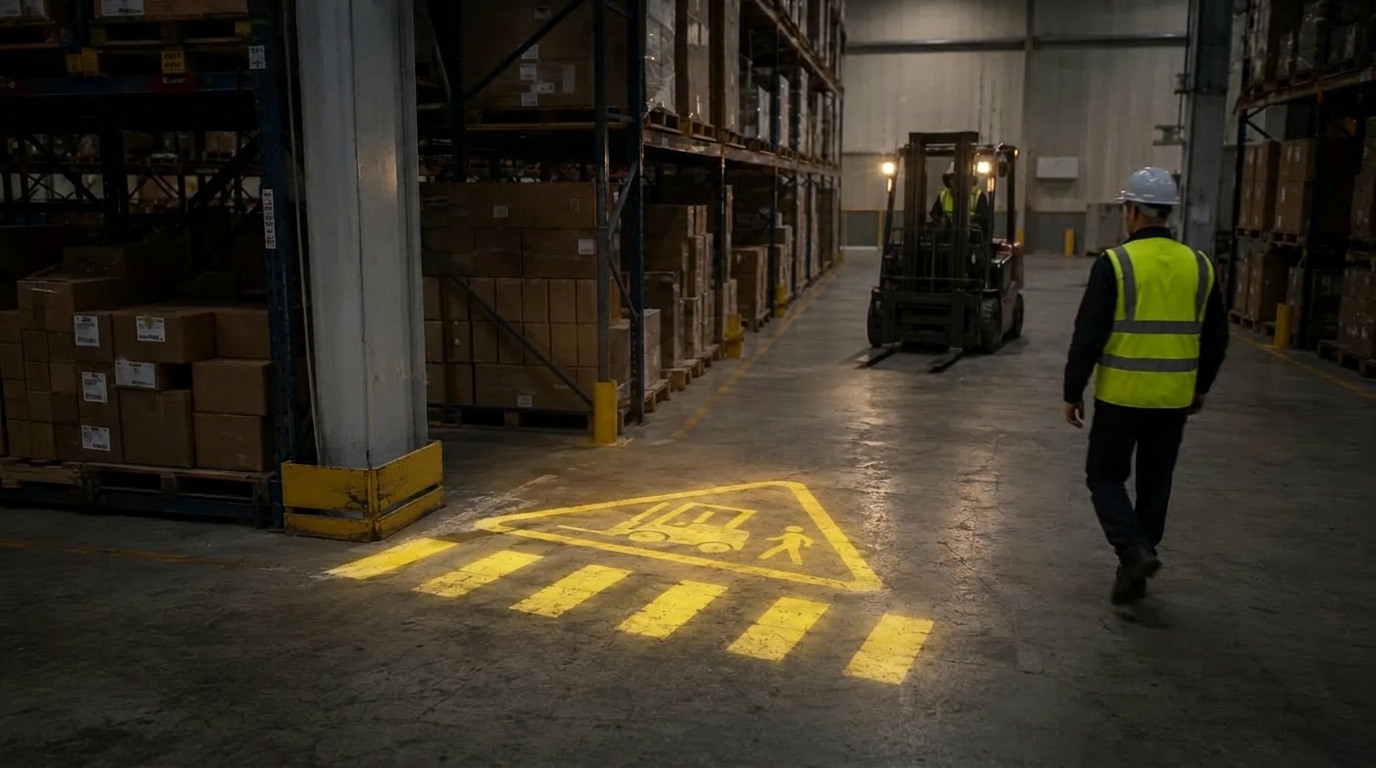
Projected restricted area signs and pedestrian markings help separate people from hazardous work zones. They are useful where access rules, walking routes or safety zones must stay visible in demanding industrial environments.
Enhance Safety with UEBEX HD
The OPTI SIGN industrial projector is designed for use across a wide range of industries and operates reliably in a temperature range from -20 °C to +40 °C. The unit features a high-quality die-cast aluminum housing, which depending on the model includes either an integrated heat sink or an active fan for effective heat dissipation.
The optimized combination of color temperature, luminous flux and beam angle enables precise, sharp projection onto floor or wall surfaces. The projection remains clearly visible even in the presence of contaminants such as dust or dirt deposits.
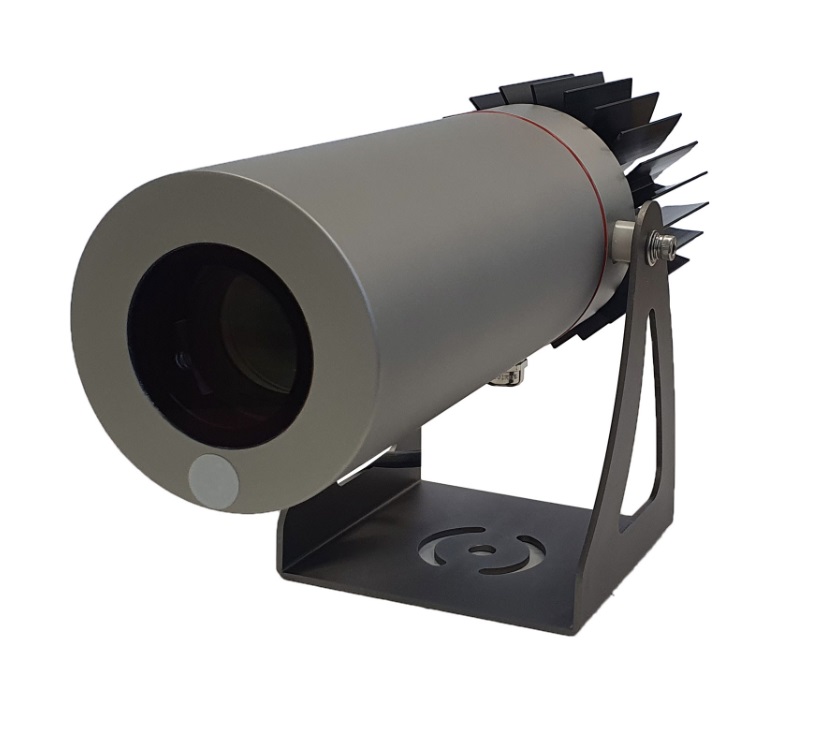
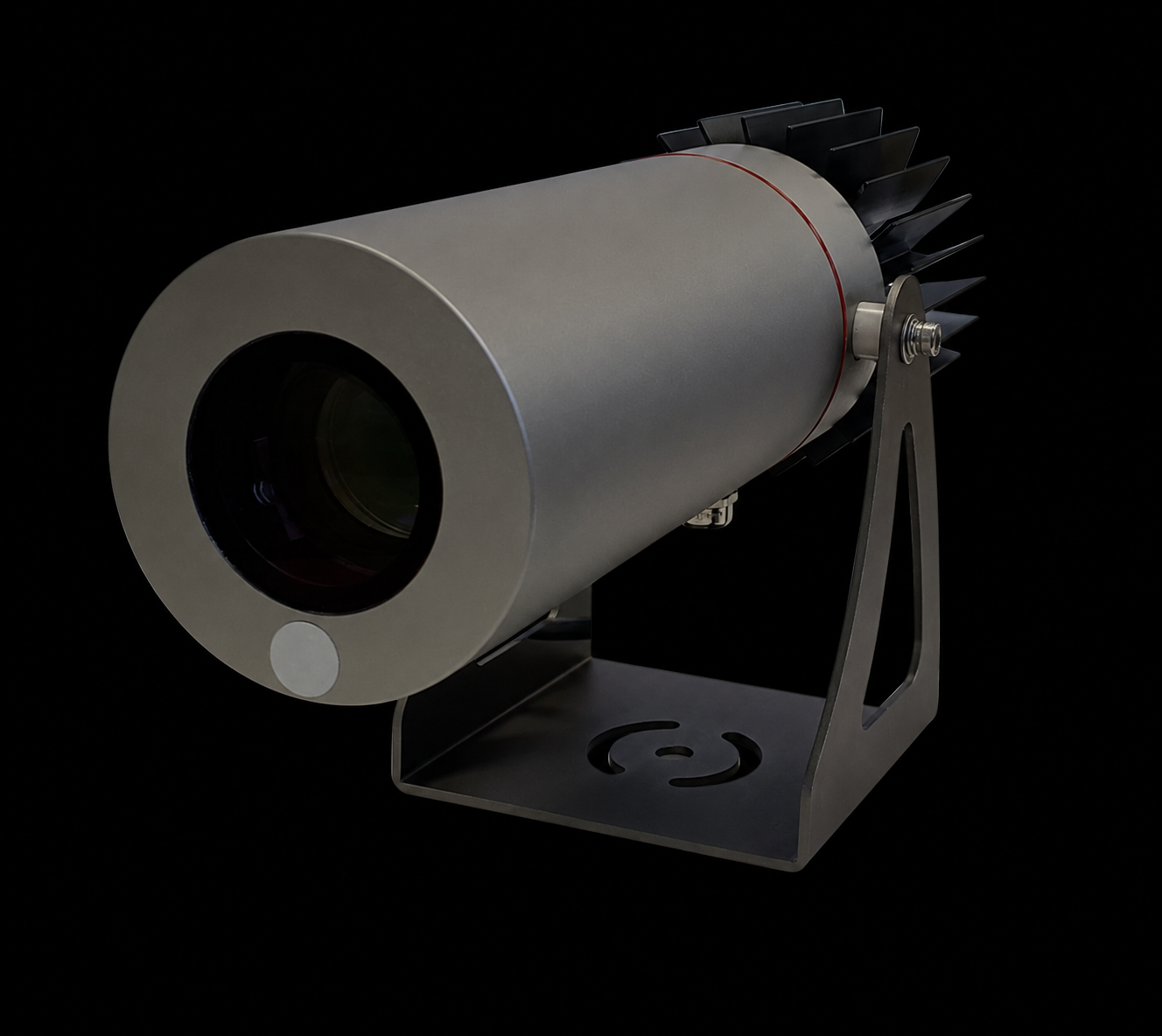
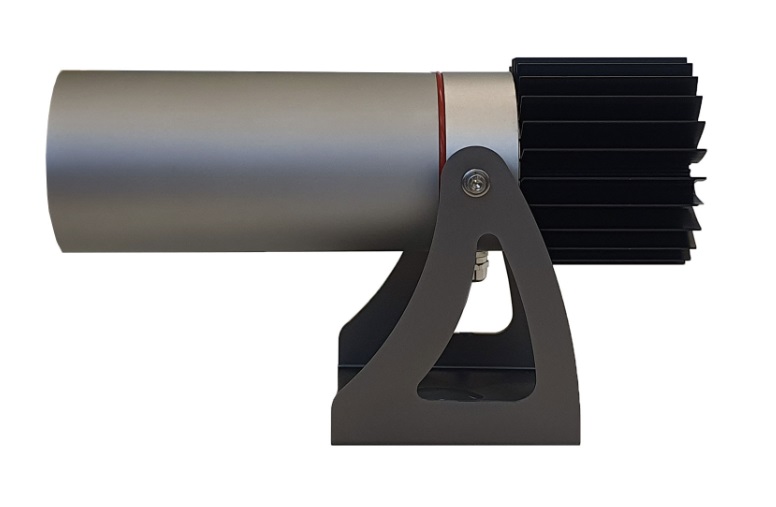
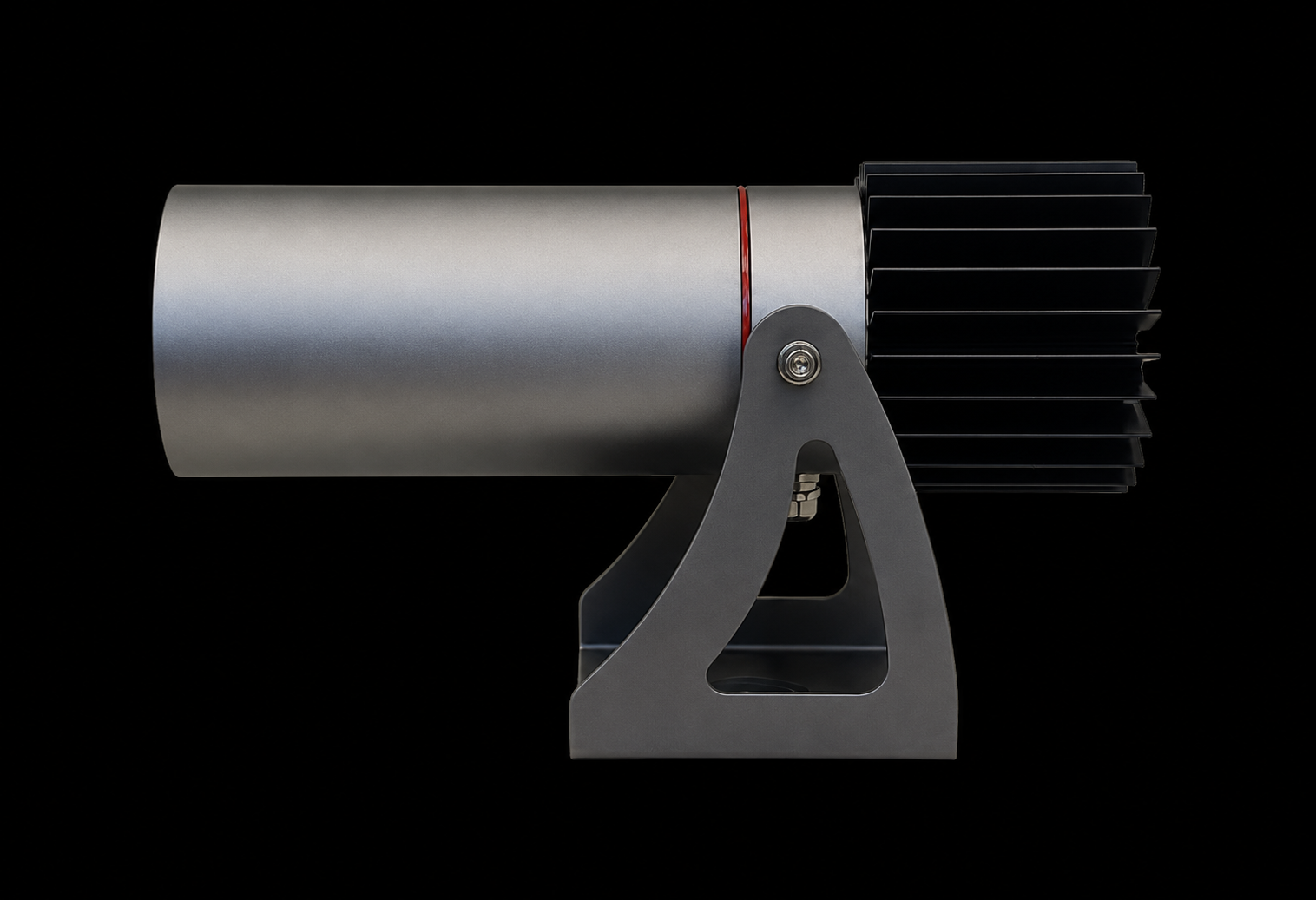
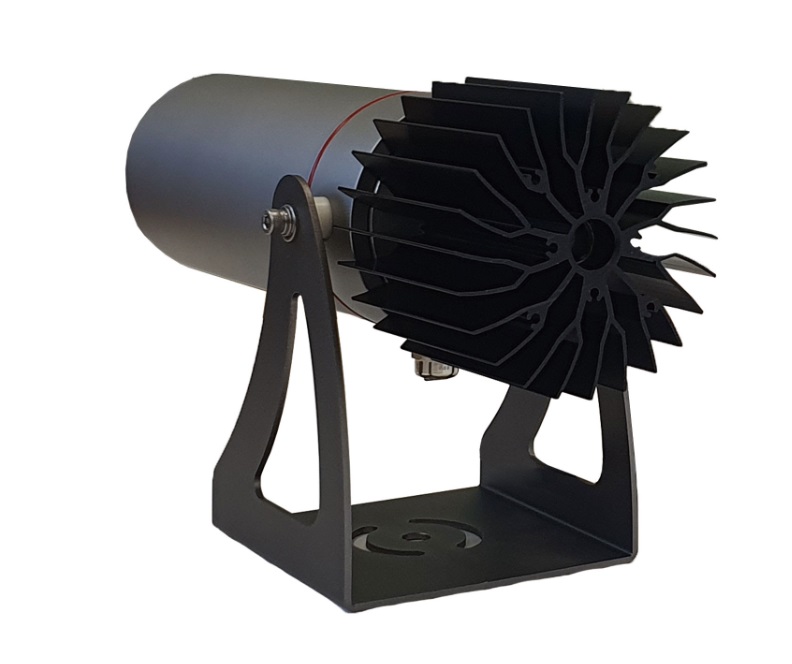
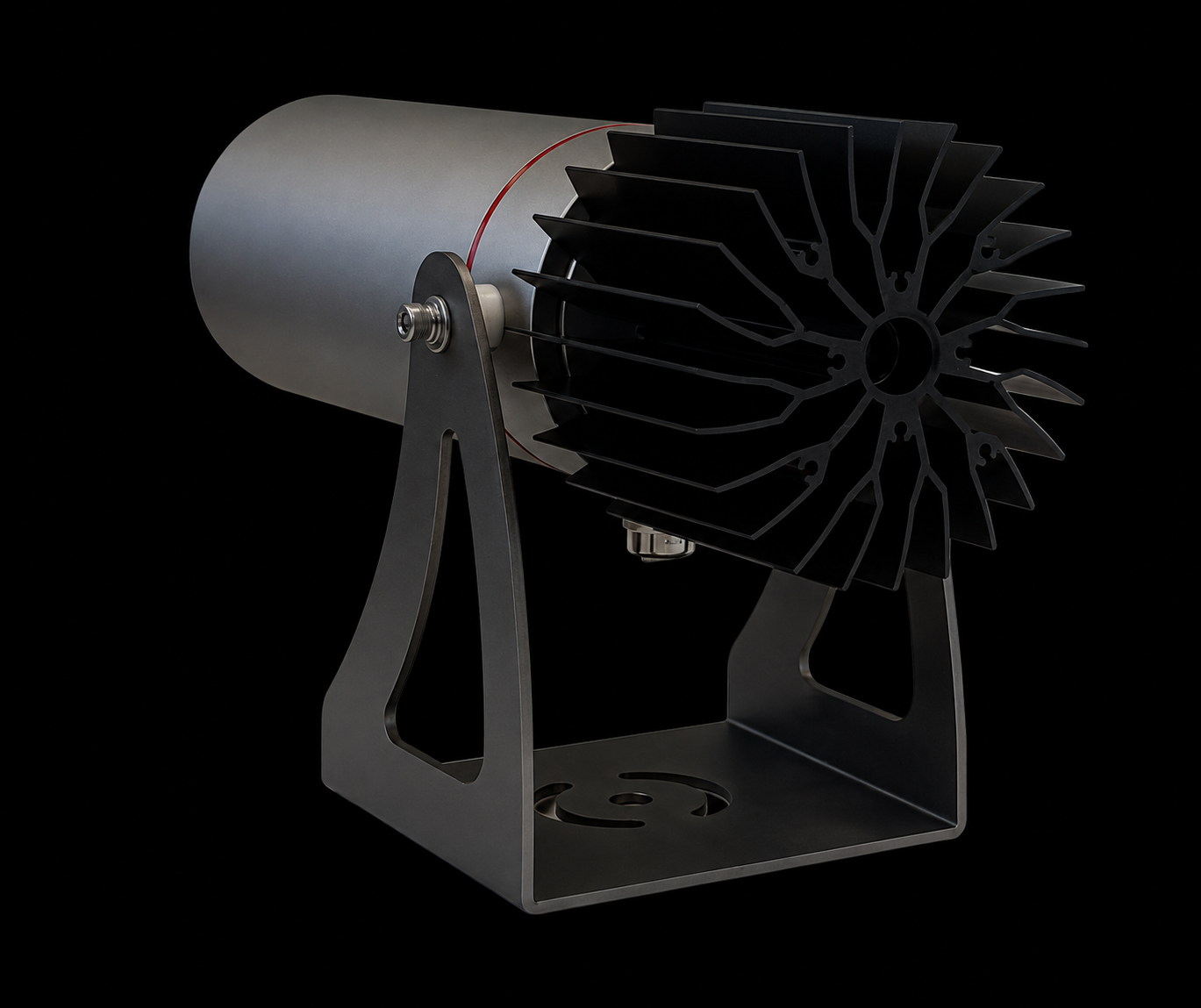
OPTI SIGN supports projected safety signs, pedestrian walkway marking, forklift safety marking and hazard area marking across demanding industrial areas.
Core configuration data for single projector and 4-fold projector / rotation variants.
| Standard power options | 50 W, 80 W, 200 W |
|---|---|
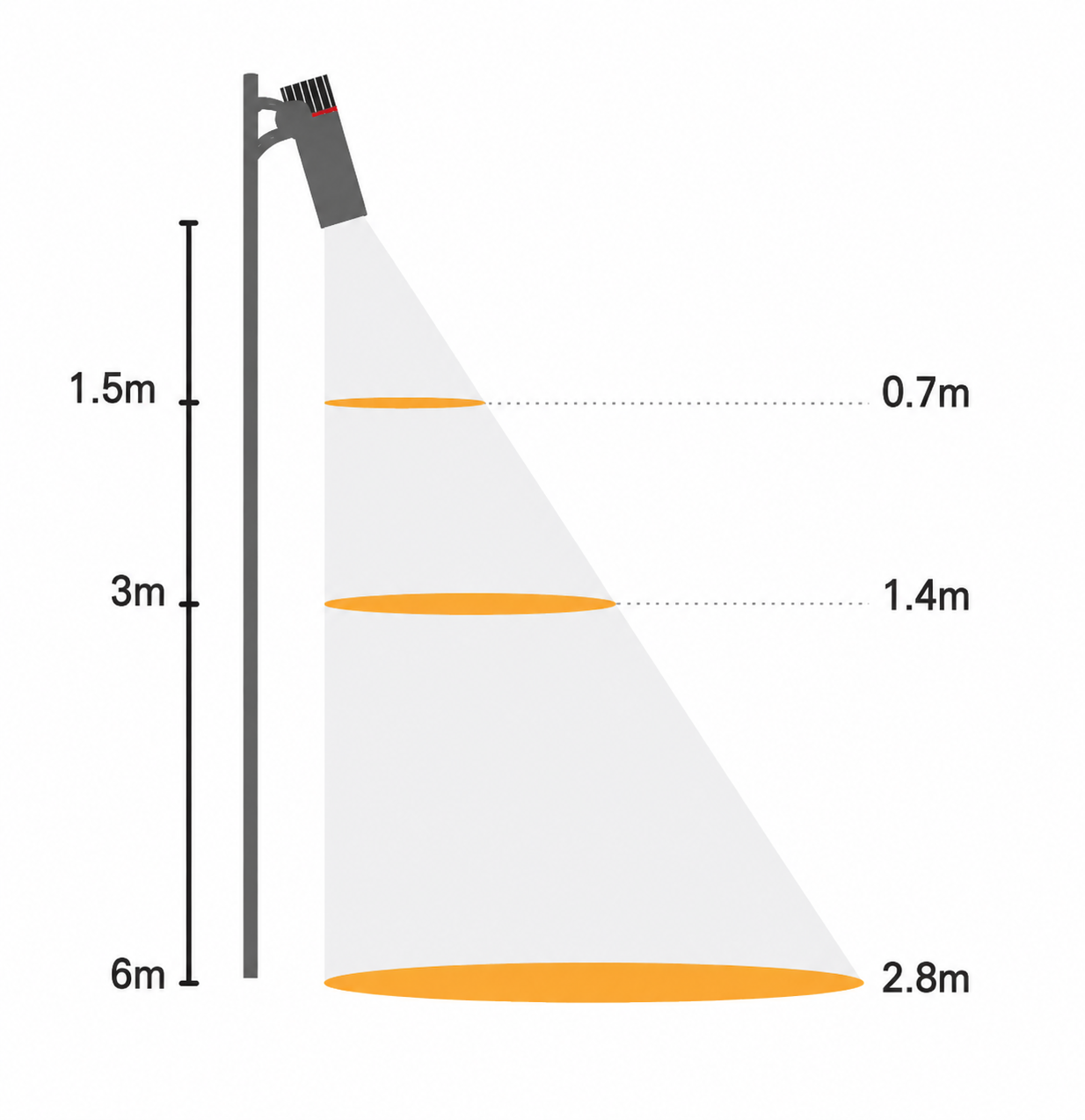
| Beam angles | SPOT 26° or WIDE 53° |
| Color variants | Black/White, Grayscale, Single-color, Two-color, Three-color, Full color |
| Possible projections | Warning signs, hazard area markings, pedestrian routes, driving lanes, restricted zones, custom safety symbols |
| Example model | Power: 200 W; Color temperature: 8,500 K; Protection rating: IP65; Housing: aluminum; Operating temperature: -20 °C to +40 °C; Cooling: active cooling with fan; Dimensions: 408 × 101 × 215 mm; Weight: approx. 3.7 kg |
| Standard power | 100 W |
|---|---|
| Beam angles | SPOT 26° or WIDE 53° |
| Color variants | Black/White, Grayscale, Single-color, Two-color, Three-color, Full color |
| Possible projections | Warning signs, hazard area markings, pedestrian routes, driving lanes, restricted zones, custom safety symbols |
| Example model | Power: 100 W; Color temperature: 8,000-8,500 K; Protection rating: IP65; Housing: aluminum; Operating temperature: -20 °C to +40 °C; Cooling: active cooling with fan; Dimensions: 386 × 154 × 330 mm; Weight: approx. 5.7 kg |
Use OPTI SIGN where conventional marking still has value, but visibility, durability or maintenance demands call for an additional projected safety marking system.
Crawlable answers for industrial safety marking, projected warning signs and OPTI SIGN planning.
Industrial safety marking uses visual lines, symbols, colors and signs to guide people and vehicles around risks in factories, warehouses and logistics areas.
It helps workers and visitors recognize pedestrian routes, forklift zones, restricted areas and hazard areas faster in busy shared spaces.
Hazard area marking identifies machine danger zones, loading areas, blind spots or restricted zones where extra caution or access control is needed.
Paint can wear under traffic, collect dirt, require preparation and drying time, and become harder to change when layouts are updated.
Projected safety signs are warning symbols, lines or route markings displayed by a safety projection system onto floors or walls.
Not always. It is especially effective where visibility, durability, dirt, traffic, layout changes or maintenance downtime are problems.
Yes. OPTI SIGN can project warning signs, hazard markings and route guidance onto floor or wall surfaces.
Yes, the projection remains clearly visible even in the presence of contaminants such as dust or dirt deposits.
OPTI SIGN is available with SPOT 26° or WIDE 53° optics, depending on the required projection geometry.
OPTI SIGN is available as a single projector and as a 4-fold projector / rotation configuration with several color variants.
Talk to UEBEX HD about the right OPTI SIGN configuration for your facility, projection distance, safety symbols and hazard marking requirements.